

Ever since generative AI entered the mainstream, it has quickly become a tool embedded in both our personal and professional lives. From drafting emails and generating code to summarizing meetings and conducting research, AI is now accessible and useful to nearly everyone. But as these systems become more widespread—and their raw intelligence increasingly commoditized—one key question is emerging: When intelligence is no longer a differentiator, what is?
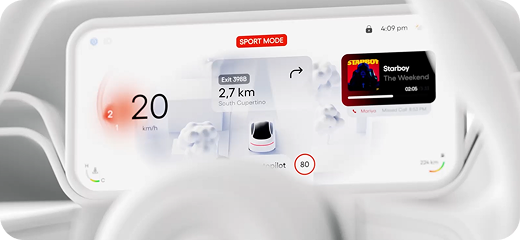

The answer may lie in something less visible but far more impactful: contextual understanding.
We’re used to thinking of AI as a question-answering machine. You ask a question, and it provides an answer. But usefulness in the real world isn’t just about being correct — it’s about being relevant. And relevance depends heavily on understanding who you are, what you’re doing, what you’ve done recently, and even what you’re likely to do next. In short, it depends on context.
Context-awareness represents a major shift in how we think about intelligence. It’s not about making the model smarter in general—it’s about making it more situationally aware. This means that future AI systems must move beyond static, timeless models of responses. They must instead develop persistent memory, behavioral awareness, and the ability to anticipate needs before they’re even articulated.
This shift requires more than just feeding more tokens into a prompt. It demands that AI systems build a lasting understanding of the user—how they work, what they care about, what their past decisions look like, and where they might need help. A truly helpful assistant will not wait for explicit commands; it will proactively surface the right information, anticipate friction points, and adapt over time.
At the technical level, this evolution depends on building what many call a “memory layer.” Rather than treating every user interaction as a clean slate, these systems retain key insights over time: what you’ve searched for, what kinds of answers you prefer, how you phrase your questions, what meetings you’ve attended, and what tasks you’ve completed. This long-term memory enables the system to become not just a helpful tool, but a personalized thinking partner.
Yet while the technical feasibility of such systems is improving rapidly, a far more difficult challenge remains: earning user trust.
For AI to effectively integrate into someone’s daily workflow—or even their personal life—it must be granted access to a much deeper layer of data than users are used to sharing. This includes behavioral patterns, communications, documents, and decisions. And with that comes a host of very real concerns about privacy, agency, and control.
The question becomes: will people trust AI systems enough to let them in?
Trust isn’t built through features; it’s built through experience. Systems must not only be secure and privacy-preserving by design, but they must also communicate that safety clearly and transparently. Users need to know what is being remembered, why it’s being remembered, and how they can control it. Systems must be explainable, interruptible, and—most importantly—respectful of boundaries.
At the same time, there’s a behavioral barrier. For decades, we’ve grown accustomed to tools that respond to explicit input: we click a button, type a query, or ask a command. But the emerging model of AI interaction is far more ambient. It involves systems that observe, learn, and offer value without being prompted. That shift in interaction requires a shift in mindset—and that takes time.
Still, it’s already underway. As users begin to notice that some systems feel more intuitive, that certain assistants “just get them,” or that a tool proactively reminds them of something they forgot—they start to develop a different kind of relationship with AI. It’s less about output and more about alignment.
The next generation of AI products won’t win by being faster or more accurate—they’ll win by being more attuned. That’s a different barrier entirely.
Understanding context is not just a feature. It’s a foundation for long-term utility, emotional trust, and user retention. It’s what turns an AI system from a tool into a companion, and from a one-off interaction into a persistent relationship.
The intelligence wars may be winding down. The understanding wars are just beginning.